


Project
Local 3Clay Printing
Fold
Land
The Netherlands
Local 3Clay Printing
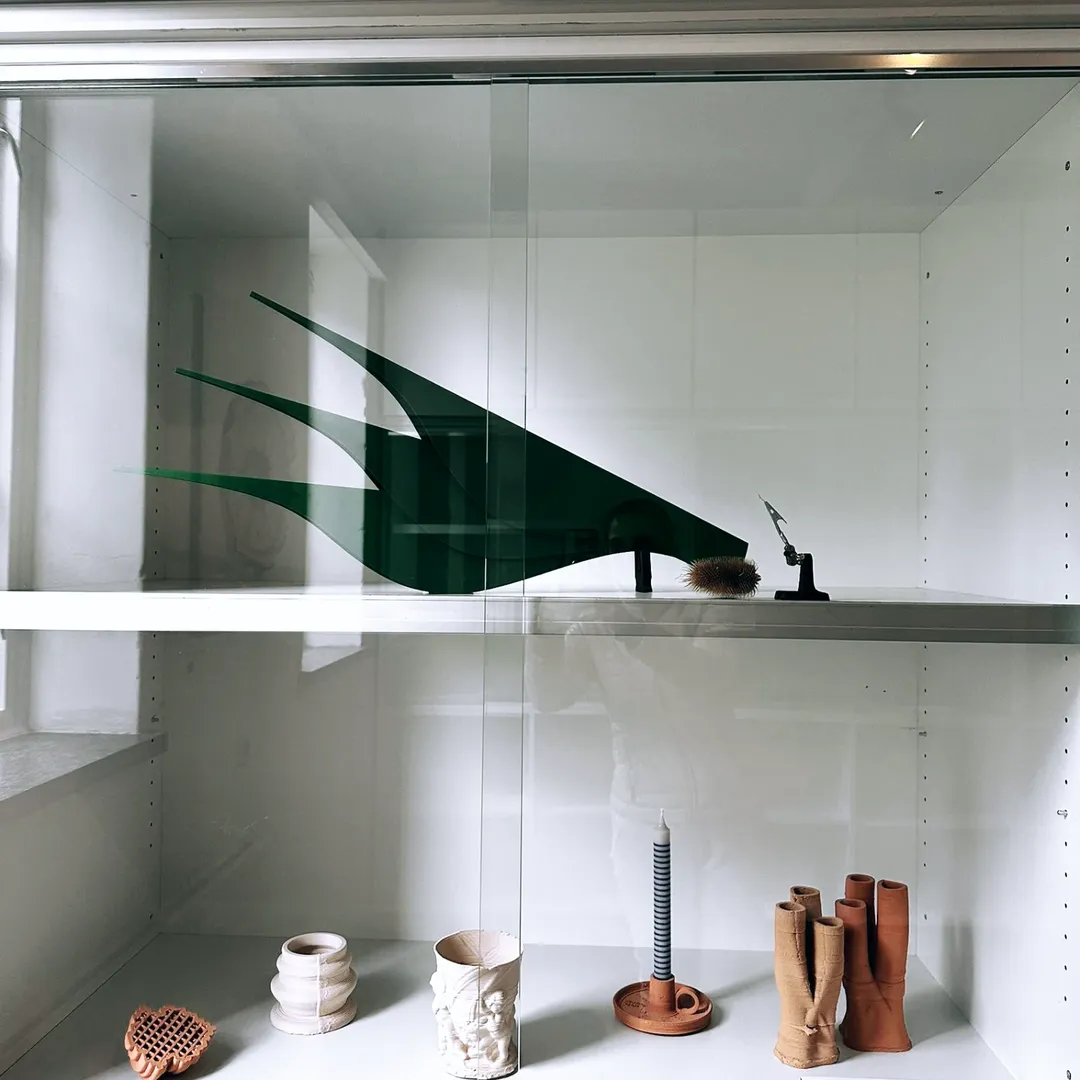
Research into locally sourced, sustainable materials is being conducted, with a focus on 3D printing techniques and Groninger clay to design products that tell the story of the Wadden Sea. The use of a 3D clay printer bridges two worlds: the craft of the ceramist and the modern craft of 3D software and printer technology. These two realms are inherently different and don’t naturally align, which creates an interesting conflict. This tension opens up numerous possibilities for merging the two worlds and leveraging the strengths of both. For instance, the precision of 3D printing meets the unpredictable nature of clay, which never behaves exactly as intended. This discrepancy can lead to small errors that, rather than detracting from the design, contribute to a unique aesthetic that would be difficult to achieve otherwise.
Fold
The large teasel (Dipsacus Fillonum) is a plant with a characteristic seed bulb. The spines of the bulb are so-called bracts, leaves which are adapted for a specific function. In this case, a spine forms to repel birds. The bract has a beautiful shape. The leaf appears folded and pointed, which creates a rigidity that makes it strong enough as a spine. The folding and pinching of the material laid the foundation for this design. The cultivated form of this plant has been used in the wool industry when carding blankets. The wooden element pinches the material in place and references a traditional clothespin.