

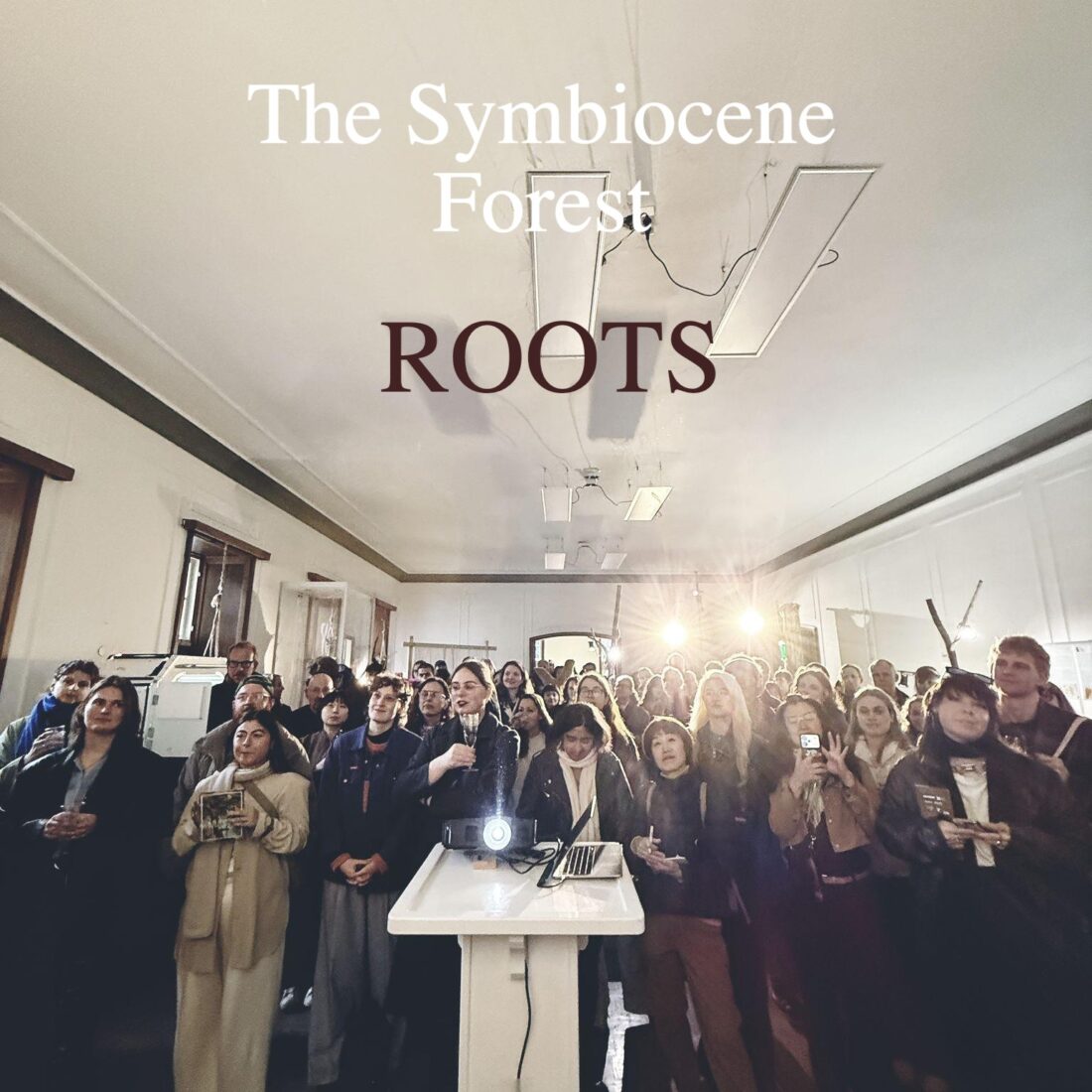
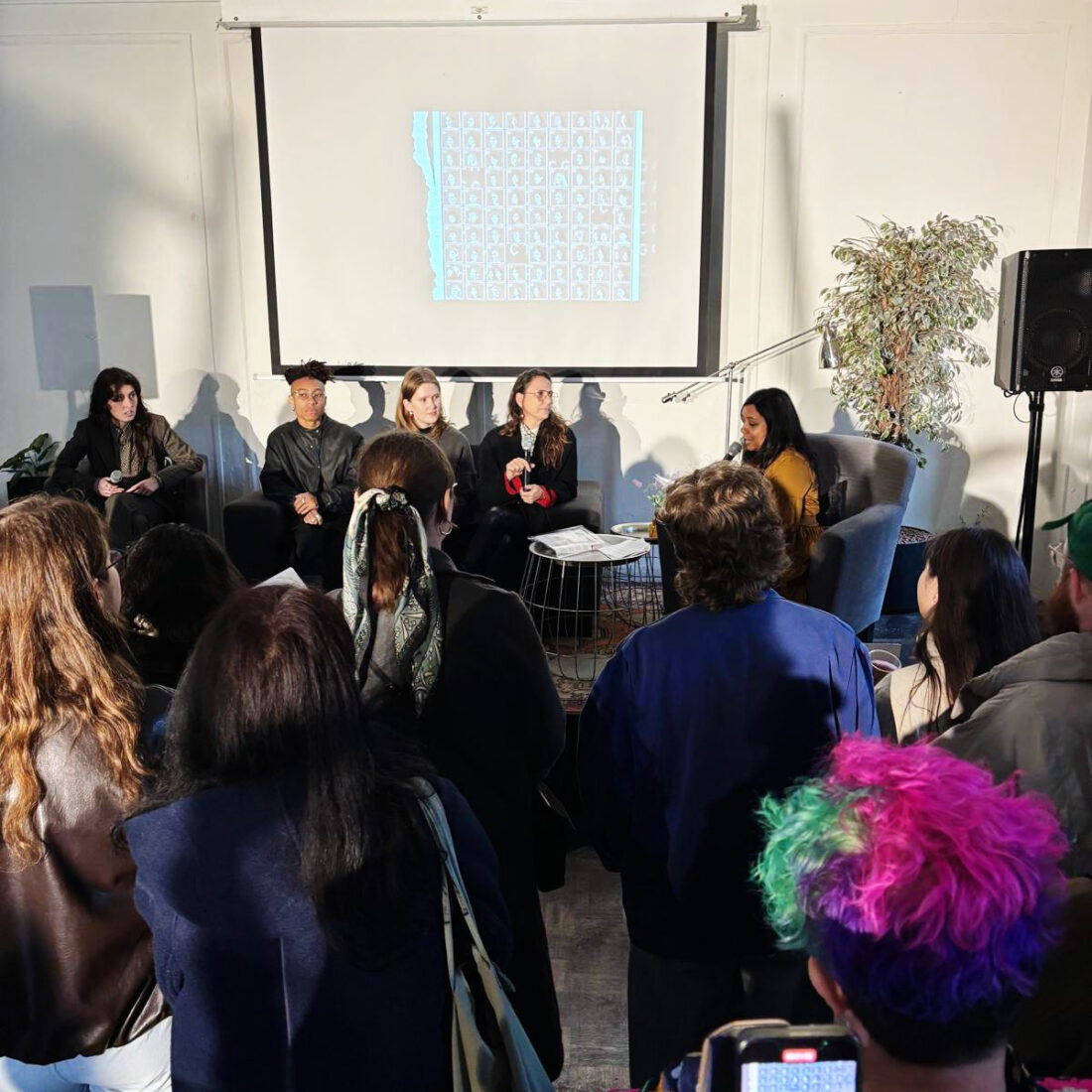
On Friday, October 17, BioArt Laboratories hosted the official opening of the exhibition The Symbiocene Forest – Roots, attended by more than one hundred participants. Contributions by over 80 international makers were presented as an interconnected constellation of works and experiences, bringing together diverse perspectives within a shared and continuously evolving network. Through a lecture and panel discussion moderated by BioArtLab alumna Shaakira Jassat and co-curator Lauren Raaijmakers, the event explored how the concept of “roots” within The Symbiocene Forest – Roots functions as a biological, cultural, and philosophical mechanism of connection, and how this perspective contributes to new forms of collectivity within contemporary art and design practices. Central to the discussion was the question of how “roots” can be understood not merely as origin, but as a dynamic and relational system that connects individuals, communities, and ecosystems. This perspective aligns with the concept of the Symbiocene, introduced by Glenn Albrecht, which emphasizes reciprocal relationships between human and non-human actors. Within this framework, “roots” are not seen as a static point of departure, but as an ongoing process of connection and co-existence.
<br>
The session opened with a powerful reflection by Shaakira Jassat on the theme of “Roots.” Although she described her own search for origin as “a messy fusion of complex realities,” she also referred to the words of bell hooks and approached “roots” as a process of moving beyond fear toward connection, emphasizing diversity, shared values, and meaningful communities. Building on this perspective, the panel highlighted “roots” as a collective structure—comparable to the interconnected system of a tree—in which resilience and growth depend on collaboration rather than individual action.
<br>
The contributions of the panelists — including Mary Anne Jaraisy, Maria Maloshenko, Akir Hall, Studio Berkvelt, Matthijs de Block, and Di Fang — can be analyzed through three underlying approaches to the notion of “roots.” First, “roots” emerged as a carrier of personal and collective memory, in which identity is shaped through stories and lived experiences. Second, “roots” were approached as an ecological network, emphasizing the inseparable interconnectedness of human and non-human systems. Third, “roots” appeared as a socio-political position, in which questions of origin, power, and representation play a central role. Together, these perspectives reveal a shift from an individualistic toward a relational worldview.
<br>
Within the context of Dutch Design Week, the lecture emphasized the urgency of approaching design practices not only with a future-oriented perspective, but also through an awareness of their origins and contexts. This implies a renewed appreciation of materials, communities, and ecological systems as active participants in the design process. The program was further enriched by a musical intermezzo by interdisciplinary artist Chiara Pastoor, whose performance deepened the atmosphere of the event.
<br>
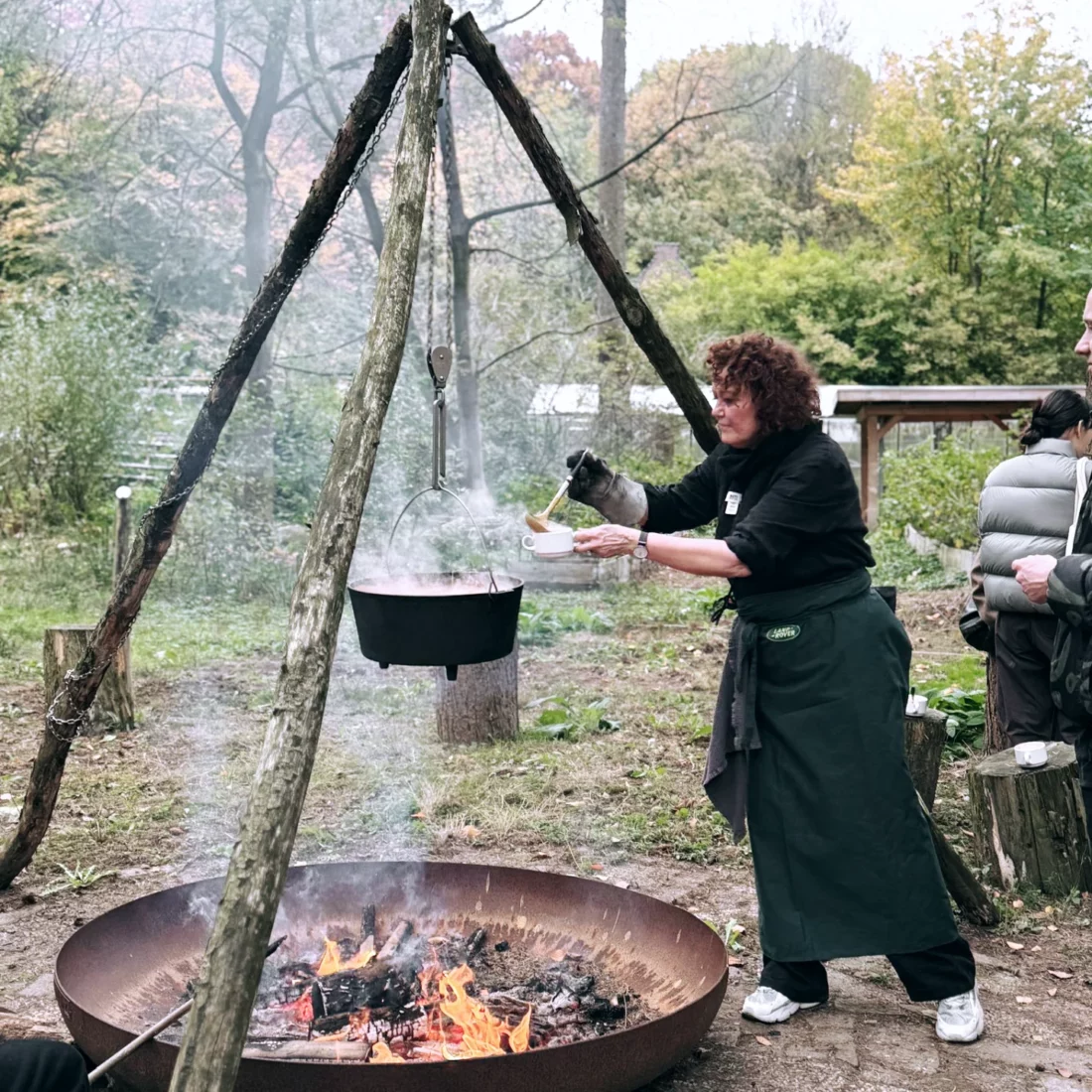
Visitors were invited to experience the exhibition as a series of interconnected narratives. Each work told its own story of origin — ranging from the personal to the political — while remaining grounded in shared questions of memory, identity, and belonging. As the day drew to a close, many participants gathered around the campfire, enjoying warm soup and a sense of togetherness, celebrating The Symbiocene Forest – Roots not merely as an exhibition, but as a living forest of ideas, practices, communities, and people, in which the roots are only just beginning to grow. The informal closing around the fire functioned not only as a social gathering, but also as a performative extension of the exhibition’s central theme: a temporary community centered on connection and exchange.
<br>
With this official opening, BioArt Laboratories demonstrated that The Symbiocene Forest – Roots is not simply an exhibition, but also functions as an experimental model for relational thinking. By redefining “roots” as a network of connections rather than a fixed point of origin, the project offers a relevant framework for rethinking contemporary art and design practices. In doing so, it contributes to broader discussions surrounding ecology, identity, and collectivity in an era in which interdependence is becoming increasingly visible and urgent.
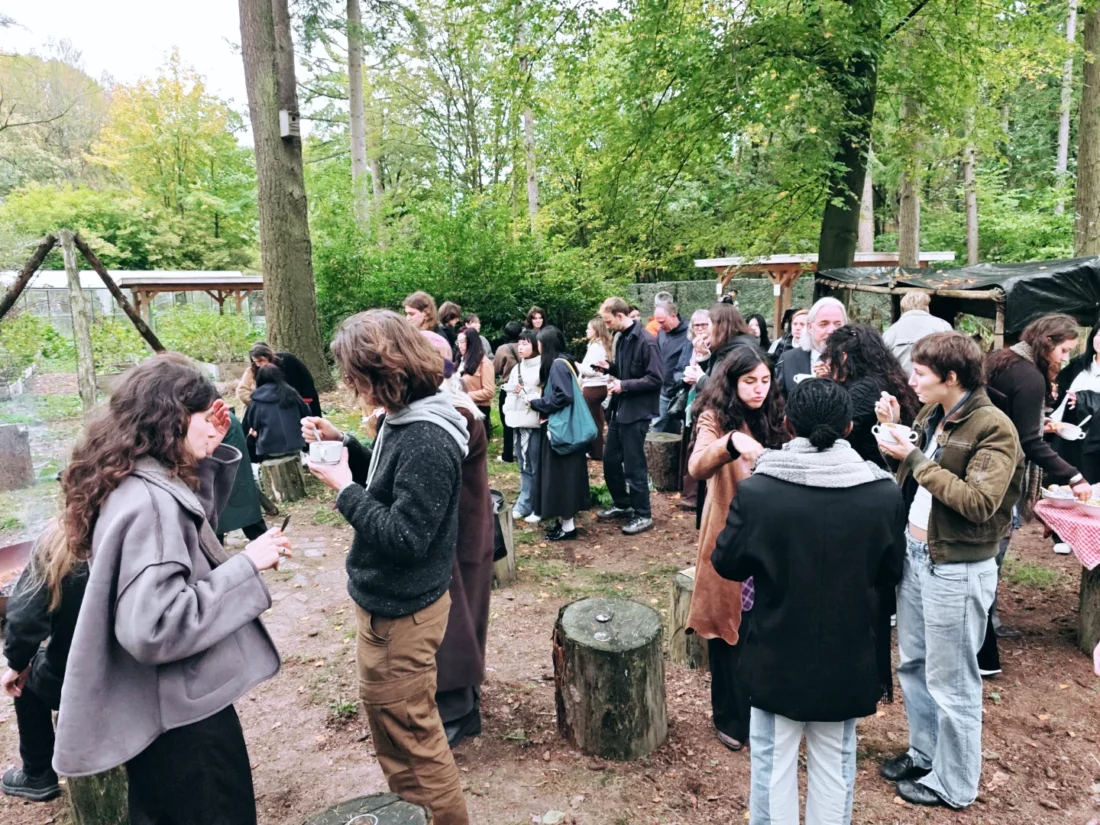
The Symbiocene Forest – Roots – Official Opening
Datum
oktober 17, 2025
Categorie
Talks